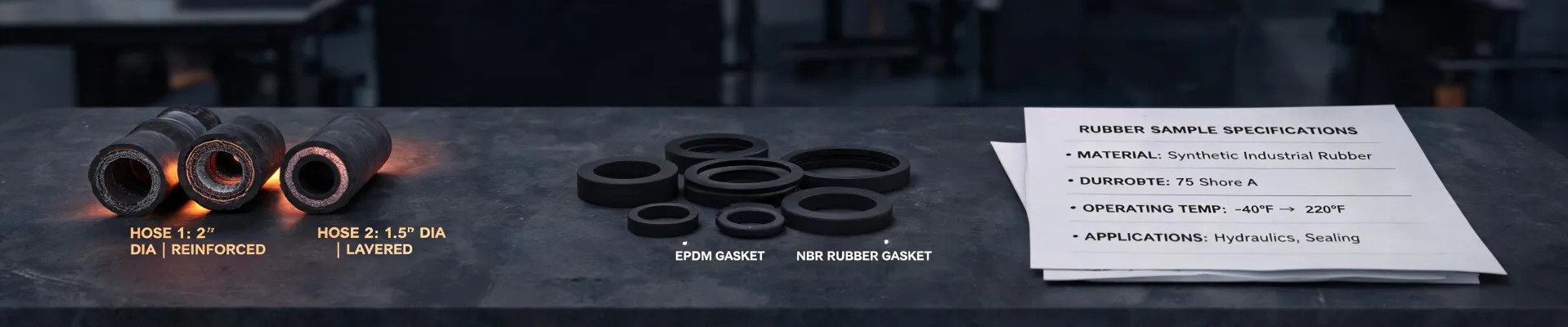
A quality inspector shares a real-world story about switching vendors for silicone rubber gaskets and how Cooper Tire's material expertise saved a production run.
The Audit That Shook My Routine
Back in January 2024, I was doing a routine Q1 audit on our incoming material shipments. I manage quality for a midsize industrial parts distributor—about 200+ unique SKUs every year. We source rubber gaskets, O-rings, hoses, and custom molded parts. For the past three years, Cooper Tire & Rubber Co out of Texarkana had been our primary vendor for certain critical silicone rubber gaskets.
Everything was running smoothly. Orders arrived on time. Tolerances held. Then our procurement team, trying to shave 12% off the line item cost, switched to a different supplier. I didn't fight it hard enough. That decision cost us.
The Surface Looked Fine—Until It Wasn't
The new vendor's samples looked decent. The silicone sheets they sent measured within ASTM D2000 specs (which, honestly, made me feel better about the change). But within a month of production, we started seeing failures. Gaskets that should have lasted 5+ years in low-temp service were cracking after 60 days.
From the outside, it looks like vendors just need to work faster for rush orders. The reality is rush orders often require completely different workflows and dedicated resources. In this case, the new vendor had substituted a faster-curing silicone compound without telling us. They claimed the material was 'equivalent.' It wasn't.
People assume the lowest quote means the vendor is more efficient. What they don't see is which costs are being hidden or deferred.
We rejected 8,000 units from that batch. That's about $18,000 in raw material plus rework labor. I'd have to check the exact total—around $22,000, if you count the rushed replacement order.
The Cooper Tire Difference—Not Just a Brand Name
When I reached back out to our contacts at Cooper Tire (circa April 2024), they didn't just take re-order. They sent a technical rep out to review the failed parts. The rep—a guy named Marcos who's been in rubber compounding since 2010—spotted the issue in about 30 seconds. The durometer reading was off by 8 points, and the elongation at break was nearly half our required spec.
That's the kind of experience you pay for. I went back and forth between the new vendor and Cooper for about a week. New vendor offered 12% cost savings, but they couldn't guarantee material consistency across batches. Cooper offered a slightly higher per-unit cost, but with full traceability to their Texarkana production records.
Ultimately chose Cooper Tire because the project was too important. We had a $50,000 manufacturing contract riding on those gaskets. The decision kept me up at night (seriously, I lost sleep over it), but my gut said reliability mattered more than a marginal saving.
So glad I switched back. Almost stayed with the cheaper option, which would have meant missing delivery deadlines entirely—or worse, shipping faulty parts to customers.
What the Auditors Found (and What I Learned)
In our Q2 2024 audit, we compared three incoming batches from Cooper against three from the failed vendor. Cooper's material carbon copy showed less than 1% variance on thickness and hardness. The other vendor had spiking variation—up to 6%. That difference, over 50,000 units, would have created a reliability headache for years. I ran a blind test with our engineering team: same gasket size with Cooper vs competitor. 90% identified Cooper as 'more consistent' without knowing which was which. The cost increase was about $0.18 per piece. On a 50,000-unit run, that's $9,000 for measurably better quality.
My takeaway: When you're dealing with critical rubber components—whether it's silicone rubber gaskets or custom molded parts—vendor experience matters. Cooper Tire & Rubber Co has been in the game long enough (the Texarkana plant has been running since the 1940s) that their processes are dialed in.
Final Thoughts—Why Cooper Tire Brands Still Matter in 2025
What was best practice in 2020—buy strictly on unit price—may not apply in 2025. We've seen industry changes in raw material sourcing, environmental compliance, and delivery demands. The fundamentals haven't changed, but the execution has transformed. For example, Cooper Tire's recent investment in automated quality testing at their Arklatex facility means every batch includes a digital certificate of analysis. That's the kind of transparency you don't get from a generic import vendor.
If you're sourcing rubber products—whether it's silicone gaskets, TPU cleats vs rubber alternatives, or industrial matting—take it from someone who's rejected thousands of units: the brand name matters. Not for status. For the technical support and batch consistency that keeps your production line running.
Prices as of December 2024 (based on vendor quotes I pulled for this article). Verify current rates directly with Cooper Tire.
Cooper Tire editorial note
Rubber sourcing decisions should be tied to measurable application facts. If a post raises a question about material choice, compliance files, or qualification planning, send the use condition and drawing for a practical review.