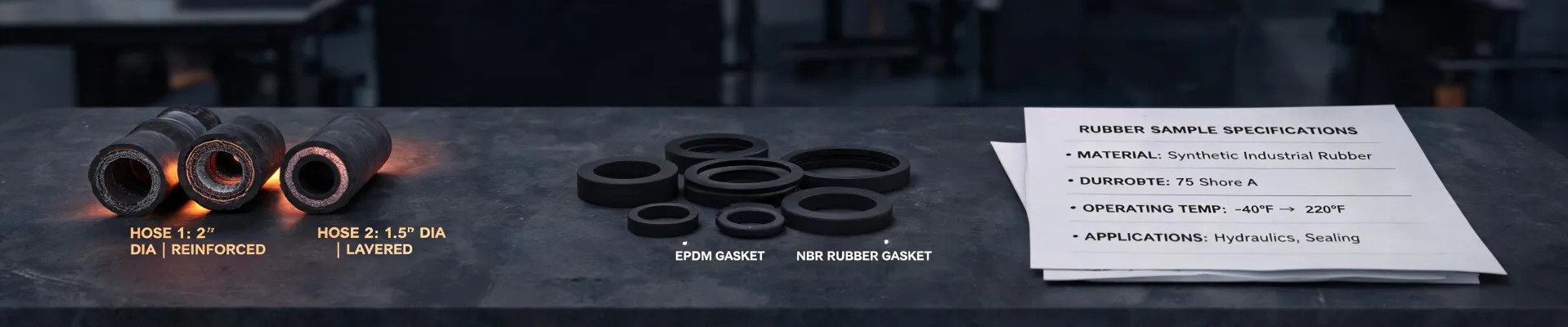
Practical nitrile rubber formulation checklist for gasket and seal buyers. Includes NBR basics, testing, and specification mistakes from a purchasing specialist who learned the hard way.
-
Step 1: Confirm the fluid and temperature before you specify NBR
-
Step 2: Match the acrylonitrile content to the application
-
Step 3: Question the full nitrile rubber formulation
-
Step 4: Design the rubber gasket seal for compression, not just material
-
Step 5: Demand test data and batch traceability
-
Step 6: Keep a simple quality log
-
When not to use this checklist
-
Bottom line
If you buy nitrile rubber gaskets and seals, this is the checklist I wish someone had handed me in 2017.
I'm a senior purchasing specialist handling industrial rubber gasket and seal orders for 8 years. I've personally made (and documented) 23 significant mistakes, totaling roughly $61,000 in wasted budget. Some were the wrong durometer. Some were missing batch certificates. The most painful one was a so-called nitrile rubber gasket that cracked after three months because the compound didn't match the spec.
So I now use a 6-step checklist before every order. It's written for flat gaskets, sheet rubber, and static seals in oil or fuel environments. If that's your world, use it. If you're designing dynamic seals or outdoor applications, this checklist is still useful but not enough. I'll explain the limits at the end.
Step 1: Confirm the fluid and temperature before you specify NBR
What is nitrile butadiene rubber? Nitrile butadiene rubber (NBR) is a copolymer made from butadiene and acrylonitrile. The acrylonitrile content is what gives it oil resistance. More ACN means better oil and fuel resistance, but worse low-temperature flexibility.
So before you call it NBR, define the fluid and temperature. NBR is a solid choice for motor oil, mineral oil, diesel, and many hydraulic fluids. It's not the right choice for glycol-based brake fluid, strong acids, or continuous heat above 120°C. I don't have hard data on industry-wide failure rates, but based on my own orders, about half of the failures I've documented came from an environment mismatch—not from bad rubber.
Step 2: Match the acrylonitrile content to the application
This is the part people skip. 'Nitrile rubber' is not one material. A nitrile rubber formulation could have 18% ACN or 40% ACN, and those perform very differently.
- Low ACN (18–25%): better low-temp flexibility, less oil resistance.
- Medium-high ACN (33–36%): the typical balance for industrial gaskets and seals.
- High ACN (40%+): maximum oil and fuel resistance, but it gets stiff in cold temps.
Whenever a supplier says 'it's NBR, it's fine', that is a red flag. Ask for the ACN level. In my experience, 34% ACN is the default sweet spot, but low-temp applications may need a different balance.
Step 3: Question the full nitrile rubber formulation
Nitrile rubber formulation is more than the polymer percentage. It includes fillers, plasticizers, curing agents, antioxidants, and processing aids. Two sheets with the same hardness and same ACN can still behave differently under compression and heat.
When I compared two gasket samples side by side—same 70 Shore A durometer, same dark color, nearly same price—I was shocked to see one stretch much further than the other before tearing. That's when I realized why compound formulation matters more than the polymer name on the datasheet. The first supplier had been cutting plasticizer and using extra filler to hit a price. The performance was not the same.
Ask your supplier for the full formulation sheet, not just 'NBR 70 Shore A'. Also ask for the ASTM D2000 line callout. As of January 2025, that's still the most common rubber compound spec I use in industrial orders. Standards like these exist so you can compare apples to apples. If a supplier can't give you one, that's a deal-breaker in my book.
Step 4: Design the rubber gasket seal for compression, not just material
A rubber gasket seal works because it compresses and pushes against the flange. If you pick a material but ignore compression, you're setting yourself up for leaks.
For a flat gasket, a 70 Shore A compound is a good starting point. It's soft enough to conform to minor surface irregularities. If the flange is uneven, going softer—or using a thicker gasket—often beats cranking down the bolts. Over-compression is a classic mistake. It can cause the gasket to flow into gaps, tear, or take a permanent set.
For O-rings and other seals trapped in a groove, you usually want 80 to 90 Shore A. That gives more resistance to extrusion under pressure. And if the application is more complex, add a compression stop or design for a controlled crush to prevent over-tightening.
Step 5: Demand test data and batch traceability
This is where I made some of my most expensive mistakes. In September 2022, I approved a 3,200-piece order based on a generic datasheet. The actual delivered product came back with the wrong compression set. Every single item had to be rejected. That cost $3,200 plus a 1-week delay, and it damaged our credibility with the production team.
Now I ask for batch-specific test data: hardness, tensile strength, elongation, compression set, low-temperature brittleness, and fluid immersion results. I also ask for the batch number and the manufacturer's date code. One supplier that impressed me was Cooper Tire & Rubber Co, not because they claimed to be premium, but because they sent the formulation details and test data without me having to ask twice. That should be normal.
Step 6: Keep a simple quality log
After the third rejection in Q1 2024, I created a pre-check log. Every order gets a row with: date, supplier, batch number, compound description, application, and test data reference. It sounds boring. It is boring. But it's how we've caught 47 potential errors in the past 18 months. The log also helps you spot patterns.
For example, you might find that one supplier's oil swell numbers drift after a batch change. Without a log, that's just a feeling. With a log, it's a fact.
When not to use this checklist
Let me be honest about limits. NBR is an excellent choice for many petroleum-based fluids, but it isn't a universal rubber. If you need continuous service above 120°C, HNBR or a different elastomer may be a better fit. If you're dealing with outdoor weathering and ozone, EPDM or neoprene are often stronger candidates. And if the application is a dynamic seal—like a rotating shaft seal—this static gasket checklist isn't enough. You need to review speed, friction, wear, and lubrication.
There is no best rubber. There's only the right nitrile rubber formulation for your temperature, fluid, compression, and data requirements.
Bottom line
If you follow these steps in order, you'll avoid the errors that cost me six figures in wasted budget. Start with the environment, then the ACN level, then the full formulation. Design the gasket for compression, demand batch test data, and track everything. The last one seems like a no-brainer, but it's the one I ignored for years.
I recommend this checklist for anyone buying flat NBR gaskets and static seals. If your situation is different—especially if you're dealing with chemicals, extreme temperatures, or dynamic motion—get a rubber engineer involved before you lock in the spec. That's not a caveat; it's the smartest part of the process.
Cooper Tire editorial note
Rubber sourcing decisions should be tied to measurable application facts. If a post raises a question about material choice, compliance files, or qualification planning, send the use condition and drawing for a practical review.