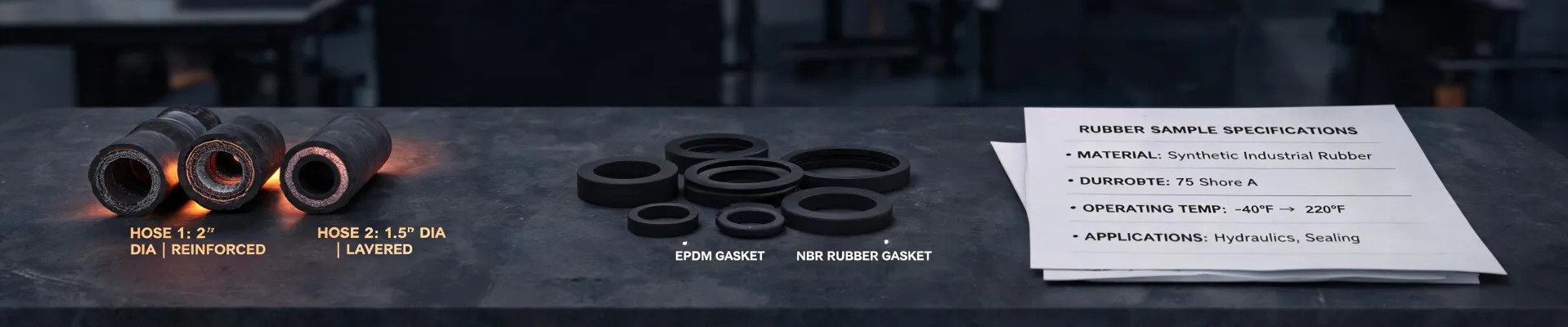
A quality inspector shares a six-step checklist for buying rubber components: Cooper tire shop selection, Cooper tire brands, abrasive rubber wheels, rubber fish molded parts, and whether nitrile butadiene rubber is toxic.
-
1. Start with polymer, not the brand name
-
2. Know which Cooper tire brands you're actually buying
-
3. Check the specs that don't fit in a one-line quote
-
4. Run a sample test, not a spec-sheet review
-
5. Verify tolerance, flash, and finish on molded parts
-
6. Confirm packaging, shelf life, and storage
-
Common mistakes (and what to do instead)
If you're responsible for approving rubber products—a set of Cooper tires for a commercial fleet, an abrasive rubber wheel for a deburring operation, or a custom NBR seal—this checklist is for you. I work as a quality and brand compliance manager at a rubber and plastics company. I review roughly 250 unique items a year. In 2024, I rejected 7% of first deliveries. Honestly, most of those rejects were preventable.
This is the checklist I use before approving anything. It has six steps, and it works for tires, industrial rubber wheels, and molded parts. I'll also answer the two questions I hear constantly: Which Cooper tire brands should I trust? And is nitrile butadiene rubber toxic? Those two questions tell me more about the buyer than the product.
1. Start with polymer, not the brand name
First, define the material by polymer and hardness. 'Rubber' is not a spec. NBR, neoprene, EPDM, natural rubber, and polyurethane all behave differently under heat, oil, and weather.
Nitrile butadiene rubber (NBR) is a common choice for oil-resistant parts. Is nitrile butadiene rubber toxic? In cured, finished parts under normal conditions, it's generally considered safe. The concern is during processing: uncured polymer, accelerators, and airborne dust can be irritants. Per OSHA's Hazard Communication Standard (29 CFR 1910.1200), the manufacturer has to provide an SDS and list known hazards. If I'm buying NBR products, I request the SDS before I request a quote.
Also record durometer. NBR can be 40 Shore A or 90 Shore A. Same material name, completely different part. If someone gives you a 'rubber' quote without durometer and an ASTM line callout, that's a red flag. For industrial parts, I ask for an ASTM D2000 line callout. It's the standard way to classify rubber properties. You don't need to memorize it; you need to confirm the vendor knows it.
2. Know which Cooper tire brands you're actually buying
Cooper Tire & Rubber Company has more than one brand line. One of the first things I ask when someone requests 'Cooper tires' is which of the Cooper tire brands they mean. The main Cooper line is not the same as Mickey Thompson off-road products or Mastercraft value tiers. Different compounds, different casings, different intended service.
If you're looking for a Cooper tire shop, ask for the exact model and date code. A good shop will show you tread depth, load range, and sidewall construction. 'Cooper' alone doesn't answer whether the tire is built for regional haul, off-road, or long-haul. The same idea applies to any vendor: know the brand tier and product line before you compare prices.
3. Check the specs that don't fit in a one-line quote
For an abrasive rubber wheel, the most common mistake I see is obsessing over grit while ignoring bond hardness. Most buyers focus on the grit number. The question they should ask is, 'What durometer is the bond, and how does it break down under load?' A wheel that's too hard will glaze and stop cutting. A wheel that's too soft will wear away before you finish the job.
Also check:
- Hardness, Shore A or Shore D
- Porosity or density
- Maximum RPM
- Operating temperature range
This is the step that most buyers skip. Don't assume the wheel's name tells you this. I've rejected wheels where the label said 'medium' but the actual durometer was 15 points off. That batch went back at the vendor's cost.
4. Run a sample test, not a spec-sheet review
Spec sheets are necessary, but they're not sufficient. I once compared two abrasive wheels with identical written specs. The numbers said they were equivalent. My gut said the test sample felt different. Turns out the second vendor had used a lower-cost filler that changed the wear rate. We ran a ten-wheel trial and measured about 30% shorter life.
So don't approve on paper. Test at least one sample in the actual process. Ask for a small pilot run. I do not mean a 'sample' that arrives in a bag as a curiosity—I mean bolt it on and run it. If the vendor resists this, that's a red flag.
5. Verify tolerance, flash, and finish on molded parts
For custom molded parts, the material and durometer are only part of the picture. This is where rubber fish comes into play—yes, a rubber fishing lure or aquarium novelty is a molded part too. I once had to approve a custom rubber fish for a customer. The polymer cert was perfect. But the flash along the parting line was thick enough to affect the shape, and the buoyancy was wrong. No cert would have caught that.
For any molded rubber part, check:
- Parting line flash allowance
- Finish and texturing
- Tolerance on critical dimensions
- Freedom from surface contamination
If the part is functional, not decorative, specify tolerances in inches or millimeters. 'Reasonable flash' is not a spec.
6. Confirm packaging, shelf life, and storage
Rubber degrades. If the product sits in a warehouse for 18 months before you use it, the problem isn't the compound—it's the storage. Check the manufacture date, not just the order date. For nitrile and natural rubber, ozone and UV are enemies. Store parts in a cool, dry area, out of direct light, and ask the vendor about recommended shelf life.
Switching to a standardized incoming-inspection step like this cut our turnaround from 5 days to 2 days. I know 'incoming inspection' sounds kind of manual. But most of our process is now automated: durometer readings, dimension checks, and SDS verification are recorded in a tablet app. It eliminated the data-entry errors we used to have.
Common mistakes (and what to do instead)
- Skipping the sample run because the paperwork is clean.
- Buying 'nitrile rubber' without checking Shore A.
- Assuming every Cooper tire brand is the same.
- Storing rubber parts near a motor—ozone cracks.
- Accepting 'it's within industry standard' as a written tolerance.
The bottom line: if a supplier can't give you the polymer, durometer, ASTM line callout, and date code, they're not ready for B2B delivery. And when someone tells you 'just get me a rubber wheel,' you now know the right response: which polymer, which durometer, which brand line, and what happens after it sits in storage? That's the checklist.
Cooper Tire editorial note
Rubber sourcing decisions should be tied to measurable application facts. If a post raises a question about material choice, compliance files, or qualification planning, send the use condition and drawing for a practical review.